


Best Lubricants & Sealants for Mercury 2.0L, 2.4L, 2.5L, 3.0L Rebuilds
.JPG/v1/fill/w_320,h_320/file.jpg)
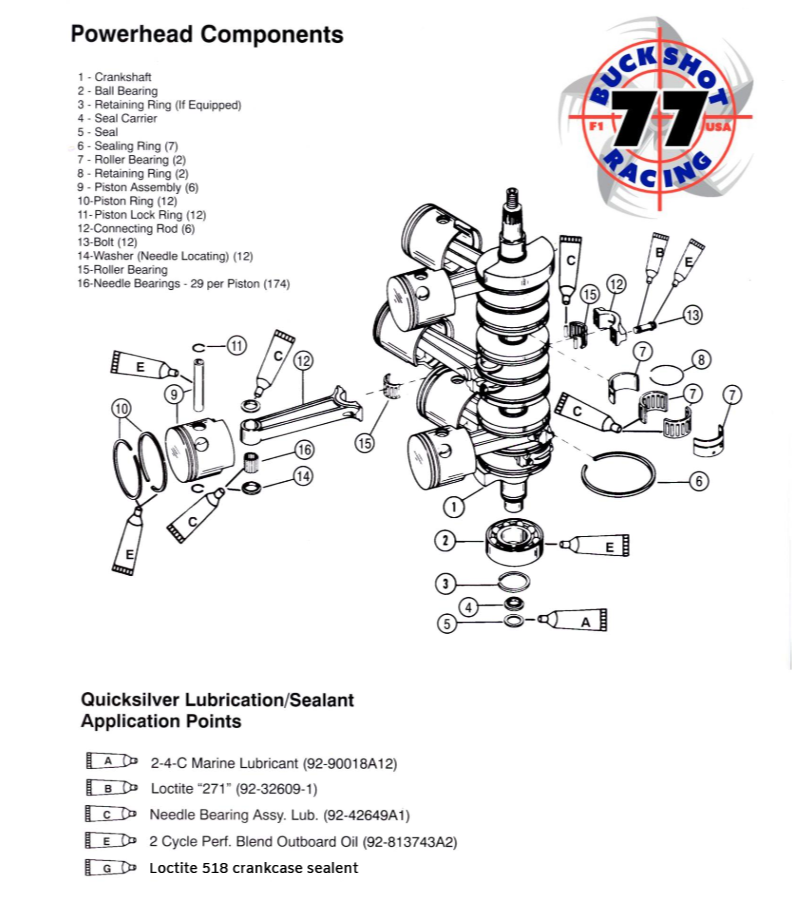
Building a Mercury 2-stroke powerhead correctly is the foundation of engine reliability, performance, and longevity. Whether you are rebuilding a stock fishing motor or assembling a high-performance race engine, success depends on proper lubrication, correct sealant use, and precise assembly techniques.
Mercury designed these engines to operate under extreme conditions, including high RPM, continuous crankcase pressure cycling, and fuel/oil mixture lubrication. Unlike 4-stroke engines, there is no dedicated oiling system, which means assembly lubrication is critical to prevent immediate damage during startup.
This guide applies to all Mercury Marine and Mercury Racing 2-stroke engines, including 2.0L, 2.4L, 2.5L, and 3.0L platforms. It covers carbureted, EFI, DFI, and Optimax configurations such as the 135, 150, 175, 200, 225 Pro Max, XR2, XR4, XR6, XRi, 260 EFI, 280 ROS, 200XS, SST-120, S3000, 300X, 300XS, and 300 Drag.
Mercury Powerhead Lubrications
During assembly, every internal component must be protected before the engine ever sees fuel or oil. Bearings, pistons, rings, and crankshaft surfaces all rely on pre-lubrication to prevent dry contact during the first rotation.
In addition to lubrication, the crankcase must be completely sealed to maintain proper internal pressure. A Mercury 2-stroke engine depends on crankcase sealing for fuel and air movement. Even a minor leak can reduce performance or cause failure.
This is why Mercury specifies exact lubricants and sealants for each location inside the powerhead, and following these specifications is critical.
Lubricants and Sealants for Assembly
Mercury specifies several key products for assembling a 2-stroke powerhead, each serving a specific purpose within the engine.
The 2-4-C Marine Lubricant is used to protect bearings, seals, and internal rotating components during assembly. This grease provides a protective film that prevents metal-to-metal contact during initial startup. It is commonly applied to crankshaft main bearings, seal lips, and bearing carriers.
Needle Bearing Assembly Lubricant plays a critical role in holding needle bearings in place during piston and rod assembly. Mercury V6 engines use loose needle bearings, with approximately twenty-nine bearings per piston, totaling well over one hundred individual rollers in a V6 engine. Without proper assembly lubricant, these bearings can fall out of position, leading to immediate engine failure.
2-Cycle Performance Oil is used to pre-lubricate pistons, rings, cylinder walls, and crankshaft surfaces. This ensures smooth movement during the first crank cycle before fuel/oil mixture reaches the engine.
Loctite 271 is used on critical fasteners such as connecting rod bolts. This high-strength threadlocker prevents loosening under high vibration and load conditions, which is essential in high-RPM outboard engines.
Loctite 518 is used to seal crankcase halves. This anaerobic sealant cures in the absence of air and creates a strong, leak-free seal without contaminating internal passages. Mercury specifically recommends this type of sealant over silicone-based alternatives, which can break down and cause internal blockage.
Assembly Process and Best Practices
A successful powerhead build begins with complete cleaning. Every component must be free of dirt, oil residue, and contaminants. Even small debris can circulate through the engine and cause damage.
Once clean, all bearings and internal components should be lubricated using the appropriate assembly products. Bearings and seals should be coated with 2-4-C lubricant, while pistons, rings, and cylinders should be coated with 2-cycle oil.
Needle bearing installation requires particular attention. Each bearing must be individually coated and carefully positioned within the piston and connecting rod assembly. Because these bearings are not retained by cages, proper lubrication is what holds them in place during assembly.
Crankcase sealing must be performed with precision. A thin, even layer of Loctite 518 should be applied to all mating surfaces. Excess sealant must be avoided, as it can enter oil passages and restrict lubrication.
Fasteners must be installed using the correct torque specifications and secured with Loctite 271 where required. Mercury engines operate under high vibration, and proper fastener retention is critical.
After assembly, the crankshaft should be rotated by hand to confirm smooth operation. Any resistance or binding must be addressed before proceeding.
Model-Specific Considerations
Although Mercury engines vary in displacement and configuration, the core assembly principles remain consistent. The same lubrication and sealing methods apply across 2.0L, 2.4L, 2.5L, and 3.0L engines.
High-performance engines such as the 260 EFI, 280 ROS, and 300 Drag require even greater attention to detail. These engines operate at higher RPM and tighter tolerances, making proper lubrication and sealing even more critical.
Optimax and DFI engines may include additional components and higher operating pressures, but the internal assembly process remains fundamentally the same.
Common Assembly Mistakes
Many engine failures can be traced back to simple mistakes during assembly. One of the most common issues is using incorrect lubricants or skipping pre-lubrication altogether, which leads to dry-start damage.
Another frequent mistake is overusing sealant. Excess sealant can break loose and block internal passages, restricting lubrication and causing failure.
Improper needle bearing installation is another major cause of failure.
Missing or misaligned bearings and/or rod caps will result in immediate internal damage.
Using incorrect threadlockers or failing to secure fasteners properly can also lead to catastrophic engine damage under load.
Final Thoughts
Building a Mercury 2-stroke powerhead is a precise process that demands attention to detail, proper materials, and adherence to proven methods. These engines are capable of exceptional performance and reliability when assembled correctly, but they offer very little margin for error.
At Buckshot Racing #77, we follow these exact procedures in every build, from stock rebuilds to full race engines. Using the correct Mercury or Quicksilver lubricants and sealants is essential—not optional—for achieving long-term durability and peak performance.


2stroke oil to gas mixture