


How to Measure Hydraulic Steering Hose Lengths for a Boat
.JPG/v1/fill/w_320,h_320/file.jpg)
Updated: Aug 8
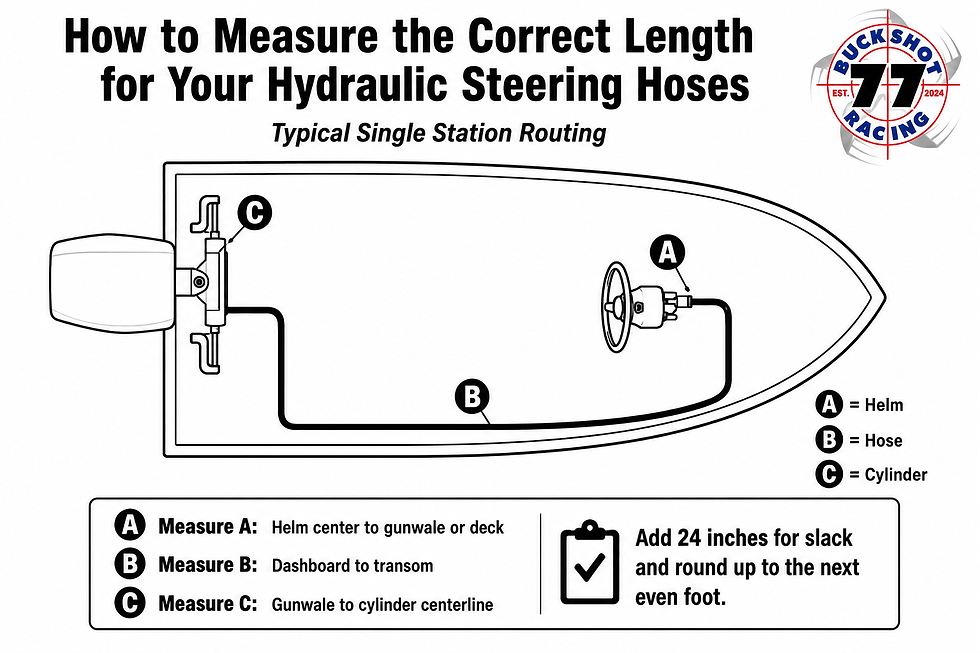
Correct hydraulic steering hose length is an important part of safely rigging an outboard boat. Hoses that are too short can pull against the helm, fittings or steering cylinder as the engine turns and trims. Excessively long hoses can be difficult to route and may create loops, kinks or unnecessary abrasion points.
Whether you are installing a SeaStar hydraulic steering system, Uflex steering, or a Buckshot Racing #77 Pro USA 350 HP or 700 HP hydraulic steering system, measure the actual hose routing path before ordering. Boat length alone does not determine the required hydraulic hose length.
For a typical single-engine, single-station outboard with a front-mounted hydraulic cylinder, the established SeaStar measurement method is straightforward: measure from the helm to the gunwale, from the dash area to the transom, and from the gunwale to the steering cylinder.
Add 24 inches for engine movement and routing, then round up to the next available even-foot hose length. SeaStar publishes this same A+B+C+24-inch method for most front-mount outboard cylinder installations.
Method 1: A + B + C + 24 Inches
A — Helm to Gunwale: Measure from the centerline of the steering wheel/helm to the gunwale or side of the boat. If the hoses immediately route downward beneath the dashboard or deck, measure to that routing point instead.
B — Helm Area to Transom: Measure along the actual path the steering hoses will follow from the dashboard or gunwale area toward the transom. Do not simply measure the boat's overall length. Follow the path through rigging tunnels, compartments and bulkheads.
C — Transom/Gunwale to Steering Cylinder: With the outboard centered, measure from the rear hose-routing point to the centerline of the hydraulic steering cylinder connection at the engine.
Now add the three measurements:
A + B + C + 24 inches = Required Hydraulic Hose Length
After adding the additional 24 inches, round up to the next even foot when selecting hose kits supplied in two-foot increments.
For example, if the calculated routing length is 17 feet 3 inches, select an 18-foot hose kit rather than trying to stretch a shorter hose into position. SeaStar specifically calls for adding 24 inches and rounding up to the next even-foot length for most cylinders.
Why the Extra 24 Inches Matters
The additional hose length is not simply spare hose. A front-mounted hydraulic steering cylinder moves with the outboard as the engine steers from port to starboard, and the rigging must also accommodate engine trim and tilt movement.
The hoses need enough free length to move naturally without pulling on the fittings. SeaStar cautions against routing hydraulic steering hose with bends tighter than approximately a 3-inch radius, because sharp bends and kinks can damage the hose or interfere with proper cylinder movement.
For high-performance applications, this becomes especially important. A Mercury Racing, high-horsepower Mercury, tunnel boat, bass boat, offshore boat or drag boat can experience substantial engine movement, vibration and steering loads. Hose routing should allow the cylinder and engine to move through their entire operating range without placing tension on the hose ends.
Method 2: The Garden Hose Method
When the boat has an unusual routing path, the garden hose method is often the easiest and most accurate way to determine steering hose length.
Lay a flexible garden hose, rope or similar line from the helm through the exact path the hydraulic hoses will follow and continue it all the way to the steering cylinder. Route it through the same rigging tubes, bulkheads and compartments that the finished steering hoses will use.
Mark the length, remove it and measure the total distance. Then allow additional length for smooth bends, steering movement and a service loop at the engine.
SeaStar specifically recommends this method when the normal A+B+C measurement does not represent the boat's actual hose route, including unusual installations such as pontoons or boats with complex under-deck routing.
Replacing Existing Hydraulic Steering Hoses
If you are replacing an existing hydraulic steering system and the previous hose length was correct, the simplest method is to remove one hose and measure it from fitting tip to fitting tip.
SeaStar recommends measuring the existing hose, rounding the measurement up to the next even foot, and ordering that hose length.
Do not automatically copy the old hose length if the previous installation had stretched hoses, tight bends, excessive loops or improper routing. This is the ideal time to correct those problems.
Buckshot Racing #77 High-Performance Rigging Tip
Before filling and bleeding the steering system, center the engine and inspect the hose routing. Then turn the engine completely port to starboard, followed by trimming and tilting the engine through its required operating range.
Watch both hydraulic hoses throughout this movement. Neither hose should become tight, kink, rub against a sharp edge, interfere with the steering linkage or place side-load on a fitting.
At the engine, use smooth sweeping bends rather than sharp 90-degree turns whenever the installation permits. Secure the hoses where necessary inside the hull, but leave the engine-end section free enough to follow steering and trim movement.
High-performance steering systems deserve particular attention to this final check. On boats capable of higher speeds, proper hose routing is part of the steering system—not simply an installation detail.
Measuring for SeaStar, Uflex & Buckshot Racing #77 Steering
The A+B+C+24-inch calculation is specifically documented for many SeaStar front-mount outboard hydraulic steering systems. Other manufacturers and specialty steering systems can have different hose fittings, routing requirements or minimum bend specifications, so always confirm the installation instructions for the exact helm, cylinder and hose system being installed.
For SeaStar, Uflex and Buckshot Racing #77 Pro USA 350 HP and 700 HP hydraulic steering systems, the goal is the same: select a hose length that follows the actual boat routing while providing sufficient movement at the outboard without unnecessary excess hose.
Measure the routing—not the boat. Measure twice, allow for engine movement, and order once.
Contact mike@buckshotracing77.com or call 714-697-1716 to discuss the right hydraulic steering system for your boat.


Comments